
AirTags, consumer tracking devices and safeguarding risks
Hidden in plain sight
A small device can have a big impact
Purpose of the briefing
To raise awareness of how Bluetooth tracking devices such as Apple AirTags, can be misused to stalk, monitor or control children and young people, and to explain what safeguarding professionals, parents, carers and organisations should do to protect them
What is stalking?
Stalking is a pattern of repeated, unwanted behaviour that causes fear, distress or concern for a person's safety.
Key characteristics
The FOUR Pattern: Behaviour is typically Fixated, Obsessive, Unwanted, and Repeated (often two or more incidents).
Relationship to victims
Stalkers are frequently people the victim knows, including current or former intimate partners, family members, acquaintances, or—less commonly—total strangers.
Distinction from harassment
While closely related, stalking specifically focuses on a pattern of personal intrusion and monitoring that generates fear or safety concerns.
Consumer tracking devices, such as AirTags, are small devices that can be attached to or hidden in personal belongings to show their location through a mobile phone app. While they are intended to help people find lost items, they can also be misused to track someone's movements without their knowledge. Practitioners should be aware that these devices have been used in cases of stalking, domestic abuse, harassment and coercive control. Similar tracking devices include Samsung Galaxy SmartTags, Tile trackers, GPS vehicle trackers, Tracking features built into smartphones, smartwatches, and some vehicles.
Why this matters: Tracking devices are inexpensive, easy to hide and widely available. They can be used to monitor victims' movements, facilitate stalking, support coercive control and increase risks to children and adults.
Safeguarding risks
Tracking devices can be used to monitor a person's movements without their knowledge or consent. For children, this may happen during family disputes, when a child is missing, or as part of bullying or exploitation. For adults, tracking devices are increasingly linked to stalking, harassment, domestic abuse and coercive control. Practitioners should consider whether a tracking device may be contributing to concerns about a person's safety, privacy or wellbeing.
Signs someone may be being tracked
Receiving an alert on their phone that an unknown AirTag is travelling with them; Hearing an air Tag emit a sound unexpectedly; finding an unfamiliar device in a bag, coat, vehicle, or personal belongings; concerns that another person seems to know their whereabouts without explanation.
Please Note
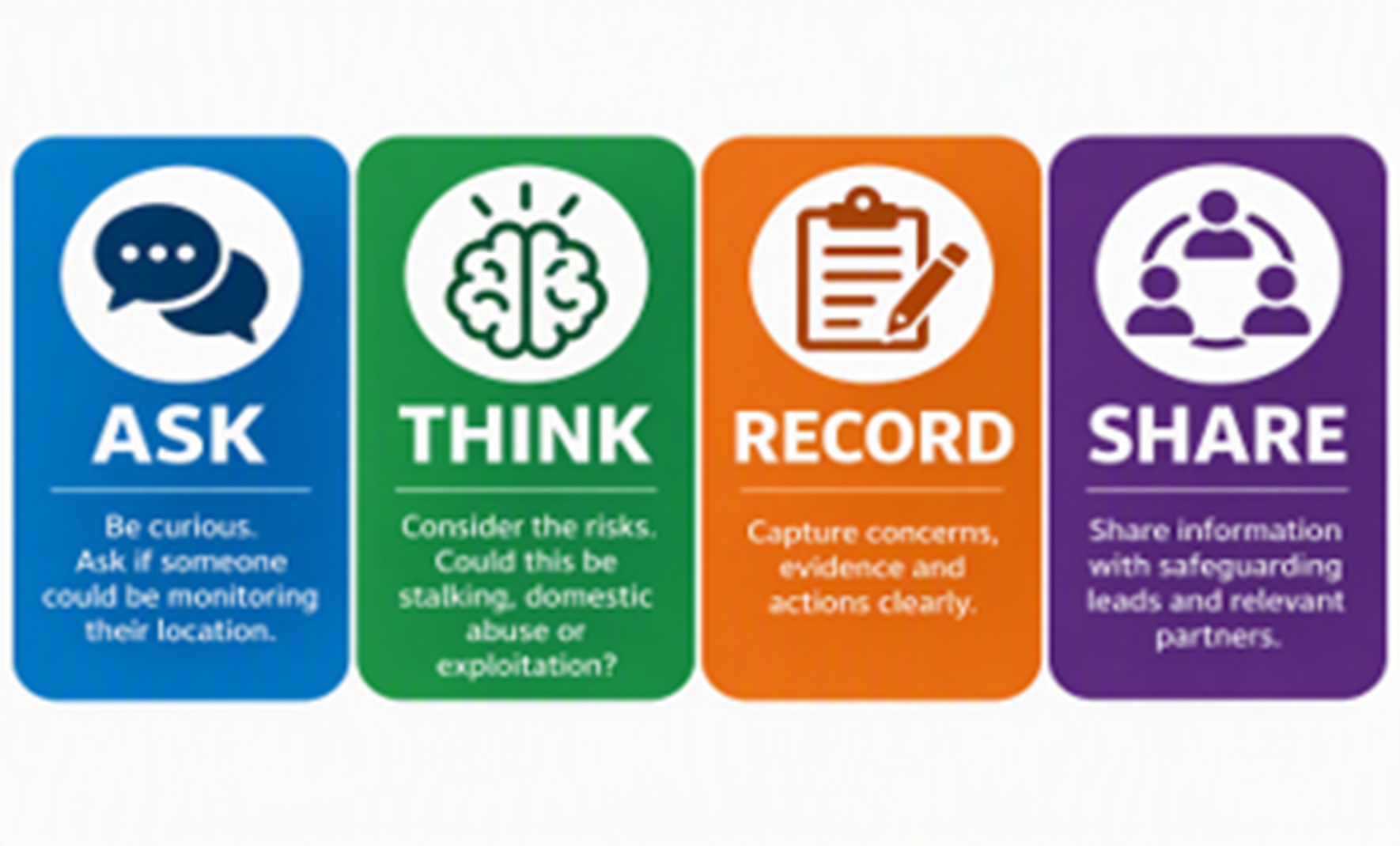
Tracking devices may be small, but the safeguarding risks can be significant. Consider technology-enabled tracking whenever concerns arise about monitoring, stalking or coercive control.